




Basements are one of the most common places for mold to develop since they sit below ground level and often have higher humidity and limited ventilation. If water enters the basement, mold growth is not far behind. When left unchecked, mold can affect your home’s structure, your indoor air quality, and your family’s health. And basement mold removal is not a DIY job.
In Minnesota, where seasonal humidity, snowmelt and rainfall all contribute to mold issues for homeowners who have basements or crawl spaces, it’s best to leave this frequent problem to the professionals. Musty odors, wall discoloration, or unexplained allergies are all signs it’s time to protect your home before the problem spreads.
Minnesota Homes and Mold Growth
Throughout the cold Minnesota winters, indoor environments can experience mold issues. Even small pockets of moisture, such as window condensation, can encourage mold to develop.
Spring brings snowmelt and heavy rain. One storm can introduce water into a basement through foundation cracks, window wells, or poor drainage. Sump pump failures are also common when the pump cannot keep up with heavy rainfall.
During the summer months, humidity levels in Minnesota frequently climb above 60 percent, especially during July and August. This allows moisture to accumulate in cooler areas, such as a damp basement, where mold spores can grow within 24-48 hours.
Why Basements Get Mold
Minnesota basements create damp conditions that mold loves. This area of the home tends to be colder than the rest of the house, and when warm air comes in contact with cool basement walls and pipes, condensation can form, providing the ideal environment for mold growth.
Basements are also prone to poor ventilation and limited airflow. Humidity and moisture can build without proper ventilation. If moisture sits unnoticed behind walls, under flooring, or in insulation, mold can grow quickly.
Mold requires organic material to grow, such as drywall, insulation, carpeting, and wood framing. Combine these with a damp environment and poor ventilation and you have a ripe situation for mold, which can spread across these surfaces faster than many homeowners realize.
Signs of Basement Mold
There are numerous warning signs that may indicate mold is present even if it’s not visible:
- Musty Odors: A persistent earthy or musty smell is often the first indicator of mold growth. Even if you don’t see visible mold, the smell may suggest hidden contamination.
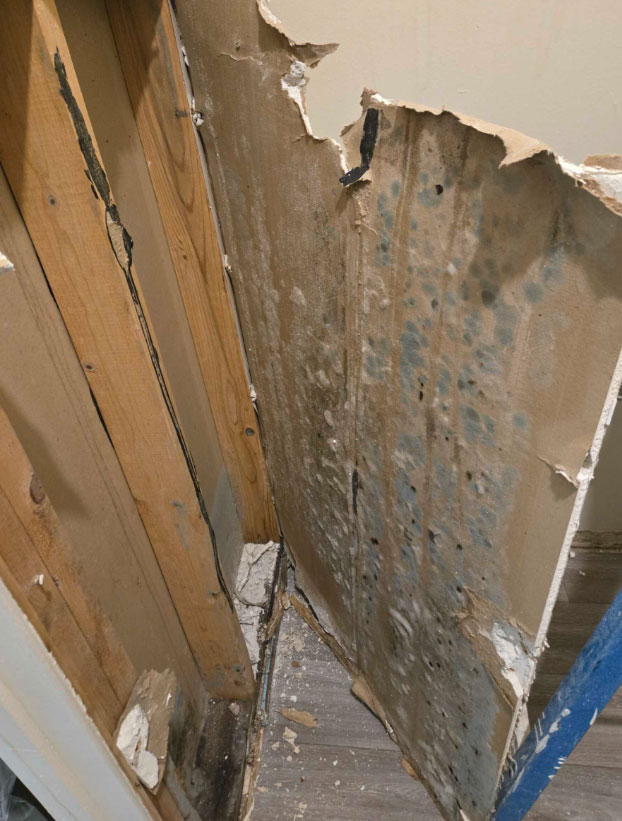
- Visible Mold Spots: Mold may appear as green patches, brown or gray discoloration on walls and ceilings, or black spots.
- Peeling Paint or Bubbling Walls: When moisture gets trapped behind surfaces, it can cause paint to bubble or peel. This often signals water intrusion—and potential mold growth.
- Increased Allergy Symptoms: The sudden onset of allergy symptoms—such as watery eyes, a runny nose, or persistent cough—especially while in the basement can signal an issue with air quality.
- Past Water Damage: A previous flood or leak in the basement that wasn’t properly cleaned means mold might still be growing.
Professional Mold Removal Process
It’s important to know that you cannot clean mold with common household products. This can only spread mold spores and make the situation worse. Our professional mold remediation services will not only contain the contamination in the correct way, but will also prevent future mold growth.
Here’s the process we follow at Restorations by Highmark:
- Mold Inspection and Assessment: The first step is to have one of our certified mold remediation professionals identify the source of moisture in order to stop it. Next, we determine how far the mold has spread, inspecting visible areas as well as checking hidden spaces where mold frequently grows.
- Containment: Once mold is discovered, we’ll seal off the affected area using plastic barriers and negative air pressure systems.
- Water Extraction: Any damp or wet areas must be dried using industrial-grade dehumidifiers and air movers to help eliminate excess humidity and moisture. Standing water is extracted, and wet building materials, such as drywall, insulation, flooring, ceilings, and carpeting are removed.
- Mold Removal: All contaminated surfaces are cleaned using specialized antimicrobial sprays, which will also eliminate future mold growth.
- Sanitizing and Air Filtration: Our process includes deodorizing and sanitizing all areas to make certain no mold spores remain. Our team uses high-efficiency HEPA air filtration systems to capture any airborne mold spores and improve indoor air quality.
- Restoration: Once the mold is removed and the space is dry, any building materials that were damaged or removed are now repaired or replaced. This may include drywall, structural materials, installation, ceilings and floors. We finish with a fresh coat of paint when needed.
Professional Mold Removal Process
It’s important to know that you cannot clean mold with common household products. This can only spread mold spores and make the situation worse. Our professional mold remediation services will not only contain the contamination in the correct way, but will also prevent future mold growth.
Here’s the process we follow at Restorations by Highmark:
- Mold Inspection and Assessment: The first step is to have one of our certified mold remediation professionals identify the source of moisture in order to stop it. Next, we determine how far the mold has spread, inspecting visible areas as well as checking hidden spaces where mold frequently grows.
- Containment: Once mold is discovered, we’ll seal off the affected area using plastic barriers and negative air pressure systems.
- Water Extraction: Any damp or wet areas must be dried using industrial-grade dehumidifiers and air movers to help eliminate excess humidity and moisture. Standing water is extracted, and wet building materials, such as drywall, insulation, flooring, ceilings, and carpeting are removed.
- Mold Removal: All contaminated surfaces are cleaned using specialized antimicrobial sprays, which will also eliminate future mold growth.
- Sanitizing and Air Filtration: Our process includes deodorizing and sanitizing all areas to make certain no mold spores remain. Our team uses high-efficiency HEPA air filtration systems to capture any airborne mold spores and improve indoor air quality.
- Restoration: Once the mold is removed and the space is dry, any building materials that were damaged or removed are now repaired or replaced. This may include drywall, structural materials, installation, ceilings and floors. We finish with a fresh coat of paint when needed.
Prevent Future Basement Mold
Once removed, you never want this stubborn intruder to return. Prevention is often simpler than most homeowners think if you follow these proactive steps to dramatically reduce the risk of basement mold:
- Control Humidity Levels: Use a dehumidifier during the warmer months and keep basement humidity below 50 percent to keep condensation from forming.
- Fix Leaks Quickly: Take the time to make minor repairs to dripping pipes, cracked foundations, and window leaks as soon as possible.
- Improve Drainage: Frequently check gutters and downspouts and make sure they’re directing water away from your home.
- Use Mold-Resistant Materials: If you’re finishing your basement, ask for mold-resistant drywall, flooring, and insulation.
- Increase Airflow: Try opening basement windows when weather permits or running ceiling fans to get air circulating in the space.
- Schedule Professional Inspections: If you suspect mold growth, contact Restorations by Highmark for a free inspection.
Protect Your Home with Expert Mold Removal
Mold growth in your home can feel unsettling and unhealthy, but with the right expertise, this annoying problem can be safely eliminated and prevented from returning.
At Restorations by Highmark, our experienced restoration specialists provide thorough mold inspections, professional remediation, and complete restoration services to help homeowners reclaim safe, healthy living spaces.
Mold in Your Basement?
Call us right away to protect your family’s health. Our 24/7 response team can be at your home quickly if you live in the Twin Cities metro area.