




When water damage to your home occurs, it’s either sudden or ongoing. And this distinction matters to insurance companies. It also matters where the water came from. So it’s important to learn how to file a water damage insurance claim. Doing it correctly is half the battle. The steps you follow, from documenting to submitting, will determine if and when it gets approved. Here are some tips for submitting a claim the correct way and also a few mistakes to avoid.
What Insurance Covers for Water Damage
Standard insurance policies for homeowners will cover sudden and accidental water damage. This does not include damage from long-term neglect or flooding. This distinction is important to know when you file a claim. Review your policy first to understand your deductible, coverage limits, and exclusions.
Common types of sudden and accidental water damage include:
- Burst or frozen pipes
- Overflowing appliances
- Plumbing failures
- Water damage from firefighting efforts
- Roof leaks from a recent storm
Water Damage That Might Not Be Covered
Certain situations require separate coverage, including:
- Flooding from rivers, storms, or groundwater, which requires flood insurance
- Slow leaks that occur over time
- Damage caused by poor maintenance
- Sewer backups without additional coverage
Steps to File a Water Damage Claim
- Stop the Water First: Before you even think about filing a claim or documenting the damage, your priority is to prevent further damage. Turn off the main water supply or stop the leak, if possible. Your insurance policy might require you to take steps to prevent additional damage.
- Document the Damage: Don’t start cleaning! Instead, grab your phone or a camera and take pictures or a video. This can help prove the extent of the damage.
- Contact a Home Restoration Company: You might be tempted to first call your insurance agent but hold off. It’s more important to begin the drying out process as soon as possible. Once the water mitigation team is en route, then you can call your insurance agent. Most water mitigation teams will also take pictures of the damage to support your claim.
Important Note: Before you call, know the difference between a water mitigation company and a home restoration company. The latter will not only mitigate the water, but they will also be with you throughout the entire process and will restore your home to its pre-damaged condition.
- Contact Your Insurance Company: Many homeowner insurance policies require that you submit a claim within 24 to 48 hours of the damage. When calling, have ready your policy number, the date of the damage, and a description.
- Schedule an Adjuster Inspection: Your insurance company will want an adjuster to evaluate the damage. Schedule this appointment as soon as possible to avoid delays in your claim getting approved. Notify the home restoration company of this meeting with the adjuster. Meeting together allows the adjuster and the home restoration company to confirm the scope of the loss and determine next steps.
- Begin Repairs: Once the insurance claim is approved and the area is dry, the home restoration team steps in to repair and rebuild your home. Drywall, flooring, cabinetry, and anything else that was damaged will be repaired or replaced.
Documentation Tips
A successful water damage insurance claim is only as good as the documentation you submit. Details matter here. And this is where many homeowners fail. Follow these tips to help push your claim through without any red flags.
- Take Detailed Photos: Clear visuals, both up close and wide shots, can help verify the damage. Take pictures of the source of the leak plus any wet flooring and carpet, water stains on walls and ceilings, and any damaged furniture, cabinets, or appliances.
- Record a Video: If it’s safe to do so, use your camera and take a video while walking through the damaged area. Describe what you’re seeing.
- Inventory the Damage: A detailed list of your damaged belongings will help to expedite the claim. Include item description, age and value of the item, brand, make and model, and purchase receipts if you still have them.
- Save Receipts: You’ll likely spend some of your own money on emergency repairs, cleaning supplies, temporary housing, and more. Keep the receipts for any out-of-pocket expenses so you can submit them along with your claim.
Common Insurance Claim Mistakes
Many water damage claims are delayed or denied because of simple mistakes. Avoiding these errors can help keep the claims process on track:
- Waiting Too Long: Delays in reporting water damage can raise red flags with insurance companies and may lead to claim denial.
- Failing to Document the Damage: Without proper photos, videos, and records, it becomes much harder to prove the extent of the damage.
- Throwing Away Damaged Items Too Soon: Keep damaged materials and belongings until the insurance adjuster has inspected them. These items serve as evidence for your claim.
- Making Permanent Repairs Before Inspection: While temporary repairs to prevent further damage are allowed, permanent repairs should wait for the adjuster’s inspection.
- Assuming Everything Is Covered: Not all water damage is covered by homeowners’ insurance. Review your policy and ask questions before starting the claim process.
Why Professional Home Restoration Matters
When water invades your home, a simple box fan won’t fix the issue. If the damage is severe, you might be facing structural issues, mold growth, and more. A professional home restoration company can quickly evaluate the damage and start removing the water before more damage occurs.
Home restoration companies can also help submit your water damage insurance claim. A reputable company will document moisture levels and the extent of the damage. Then they’ll provide a detailed estimate of repairs to support your insurance claim. Many will communicate directly with your insurance adjuster to speed up the claims process. Once the claim is approved, the home restoration team will begin rebuilding the damaged area.
Choosing the Right Restoration Partner
When selecting a restoration company, ask if they:
- Perform home restoration and not just water mitigation
- Are licensed and insured
- Will help talk you through the insurance claim process
- Have facilities to professionally clean and store your water-damaged belongings
- Provide 24/7 emergency services
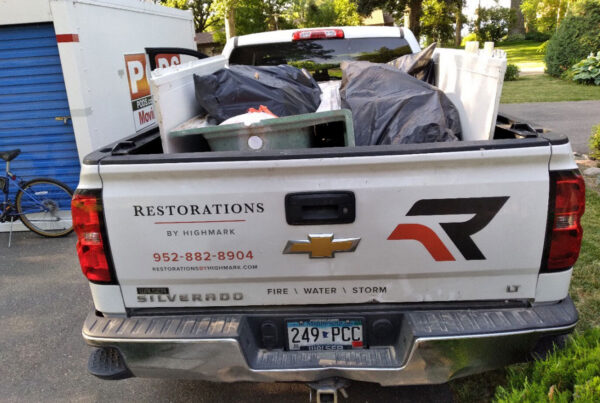
At Restorations by Highmark, we handle everything, from emergency water extraction to restoring your home. Members of our team are former insurance adjusters, so they know exactly what is needed to get an insurance claim approved.
Contact us immediately if you experience water in your home. Our team will be onsite within an hour if you reside the Twin Cities metro area. And we’ll be there until your home is back to (or better than) its pre-incident state.
Is There Water Damage in Your Home?
Call us right away to protect your family and property. Our 24/7 response team can be at your home quickly if you live in the Twin Cities metro area.